
Office Cleaning
How often should an office be professionally cleaned?
A practical guide to choosing an office-cleaning frequency in Eastbourne, based on occupancy, high-use areas, access and the standard required.
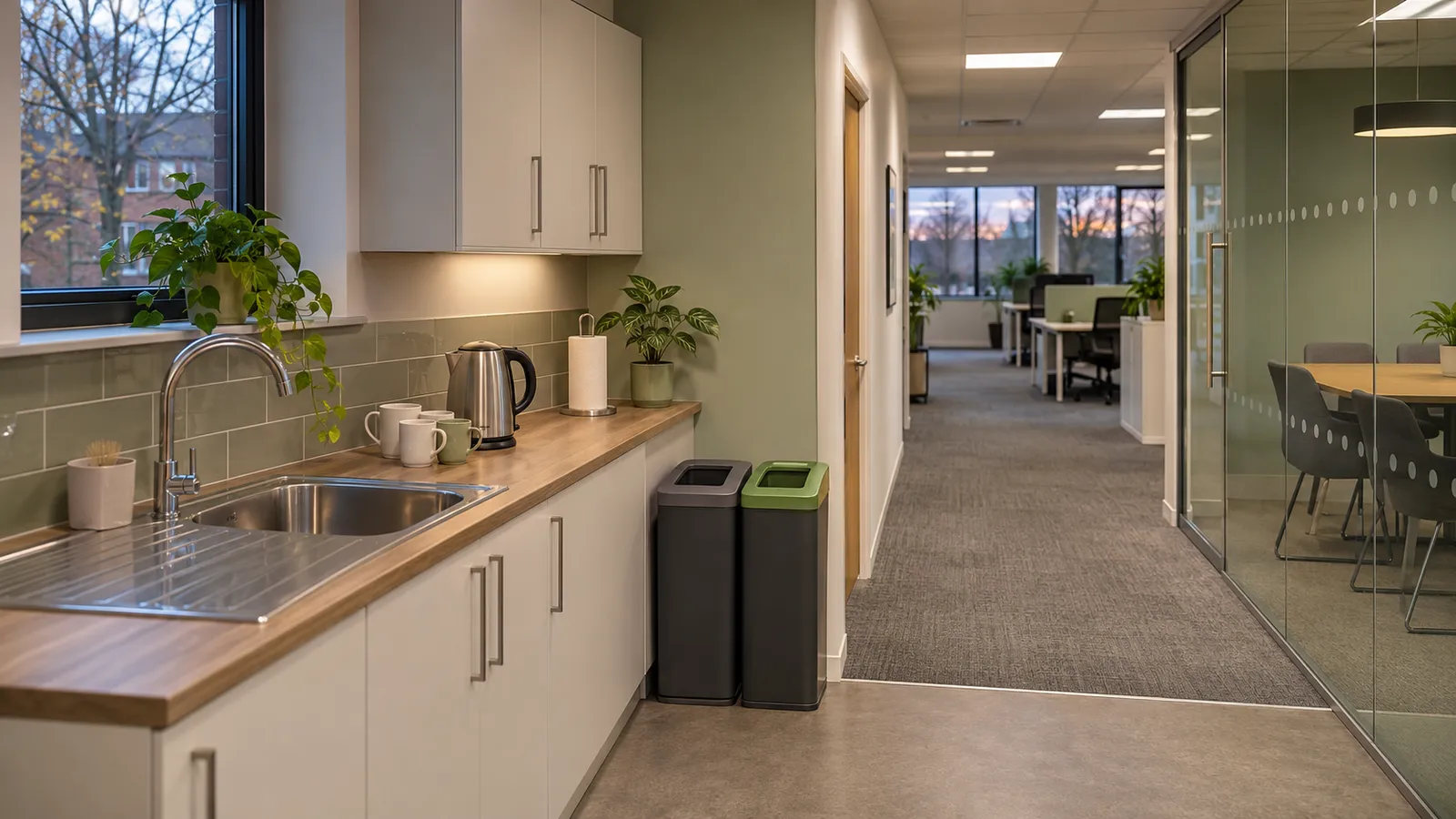
An office should be cleaned often enough that its busiest areas remain at the agreed standard between visits. That may mean daily attention for a heavily used washroom or staff kitchen, several visits each week for a busy professional workplace, or a well-defined weekly service for a smaller, lower-use office.
The useful question is not simply ‘daily or weekly?’ It is ‘which areas change fastest, what must be dealt with immediately by the business, and what recurring pattern will keep the whole premises consistently presentable?’ For offices in Eastbourne and East Sussex, that is the foundation of a cleaning frequency that can be quoted and managed properly.
There is no universal office-cleaning frequency
Two offices with the same floor area can need different schedules. One may have a full team in five days a week, regular visitors and a shared kitchen; another may use hybrid working, have few visitors and leave several rooms quiet for much of the week. Headcount, occupancy pattern and room use matter more than size alone.
The Workplace (Health, Safety and Welfare) Regulations require workplaces, furniture, furnishings and fittings to be kept sufficiently clean, and waste should not be allowed to accumulate except in suitable receptacles. The law does not turn that requirement into one standard timetable for every office. The organisation still needs arrangements that suit its premises and risks.
A commercial cleaning provider can support the planned routine, but the business remains responsible for day-to-day issues that cannot wait for the next visit, such as a sudden spill, an obstructed route or overflowing waste.
Map how the office is used during an ordinary week
Before choosing a frequency, look at one representative working week. Record how many people are normally present each day, when clients or visitors arrive, which entrances they use and which shared rooms are busiest. Avoid basing the decision on an unusually quiet holiday period or a single peak event.
Divide the premises into use zones. High-use areas might include the main entrance, washrooms, staff kitchen, breakout area and the route between them. Medium-use areas may include occupied workspaces and frequently booked meeting rooms. Quiet offices, storage rooms or little-used meeting spaces may need a different task cycle.
This exercise prevents two common mistakes: paying for the same level of attention everywhere, or choosing too few visits and asking each clean to recover the busiest rooms before the rest of the specification can begin.
- Normal headcount and office days, including hybrid-working patterns.
- Visitor numbers and the spaces clients see first.
- Number and use of washrooms and kitchen facilities.
- Floor finishes, entrances and wet-weather traffic routes.
- Waste arrangements and who handles urgent issues between visits.
Decide which areas need attention on every visit
The rooms used by the most people normally set the rhythm. Washrooms, kitchen worktops and sinks, entrance floors, internal waste points and obvious touch marks can lose their agreed standard sooner than a quiet meeting room. These areas are sensible candidates for the every-visit specification.
HSE says employers must provide clean premises, furniture and fittings, remove dirt and refuse regularly, clear spillages promptly and keep toilets and hand basins clean. A planned contract should support those outcomes, while making clear which immediate actions remain with the occupier between scheduled visits.
Ask what ‘clean’ means in each priority area. ‘Kitchen’ is too broad to manage consistently. A clearer specification might identify worktops, sink, cupboard fronts, appliance exteriors, floor and internal waste as the recurring tasks, with fridge interiors or other details placed on a separate cycle.
Use a simple test for daily, several-times-weekly or weekly cleaning
Daily or near-daily cleaning can be appropriate where the office is occupied throughout the working week and high-use facilities visibly fall below the required standard within a day. The schedule does not have to give every room equal attention each time; it can prioritise washrooms, kitchens, entrances, waste and client-facing spaces, with other work rotated.
Several visits each week can suit a busy smaller office where the main shared areas need regular control but a full daily service would add unnecessary visits. The important point is to choose the actual days around occupancy, not simply spread visits evenly while missing the busiest periods.
A weekly clean may work for a smaller, lower-use or hybrid office when the premises remains manageable between visits and the business has reliable arrangements for spills, waste and basic kitchen order. If the cleaner must repeatedly spend the visit recovering one or two rooms, the frequency, visit time or priority list needs reviewing.
Fortnightly cleaning may be considered for genuinely low-use premises, but the same test applies: can the agreed standard be maintained for the full interval without routine tasks or waste building up? The answer should come from observed use, not the appeal of fewer visits.
Frequency and time per visit must be considered together
More frequent visits do not automatically create a better service if each visit is too short for the agreed work. Equally, one long weekly visit may not protect a washroom or entrance that needs attention sooner. The useful comparison is the complete pattern: visit frequency, expected time, priority areas and task cycle.
Give prospective providers the same occupancy and room information, then ask them to explain the proposed pattern. A recommendation is easier to assess when it says what happens on every visit, what is rotated and what would prompt a review.
If budgets require prioritisation, protect the high-use areas first. It is better to agree a realistic core service than to publish a long specification that cannot be delivered consistently within the proposed schedule.
Separate recurring work from periodic detail
Not every task needs the same frequency. Routine floor care, washrooms, shared kitchen surfaces and waste may belong in the recurring plan. Internal glass, skirting, high-level dusting or a deeper carpet treatment may sit on an agreed periodic schedule or require a separate quotation.
Keeping those categories visible helps a facilities contact understand what should happen this visit and what will happen later. It also makes competing proposals easier to compare, because an apparently lower recurring price may simply exclude work that another provider has scheduled periodically.
The distinction should remain practical. A task does not need a monthly label merely because it sounds orderly; its cycle should reflect use, condition, the surface involved and the standard the organisation wants to maintain.
Choose a cleaning window that works safely
Frequency is only useful if the visits can happen at workable times. Cleaning during occupied hours can make communication and access straightforward, but busy routes and meeting rooms may be harder to complete. Out-of-hours cleaning may reduce disruption, but access, alarms, locking arrangements and an operational contact need to be agreed clearly.
Floor cleaning deserves particular thought. HSE advises considering quiet hours, cleaning in sections, leaving a dry route and restricting access until smooth floors are dry. Those points may influence both the visit time and the order in which entrances, kitchens, corridors and washrooms are cleaned.
Share site rules and known constraints during the proposal stage. Sensitive access details should be handled securely rather than placed in a widely circulated quotation.
Review the pattern after real use—not just at renewal
A starting specification is a reasoned plan, not a prediction that can never change. After the first few weeks, ask whether priority rooms remain at the agreed standard, whether tasks regularly carry over and whether any visit clashes with the way the office operates.
Seasonal weather, changing headcount, new office days, events or a reconfigured workspace can alter demand. Record material changes and review the scope, frequency or timing rather than expecting extra work to be absorbed informally.
Use simple evidence: recurring feedback, missed access, waste levels, condition before each visit and which tasks repeatedly need more attention. The aim is not paperwork for its own sake; it is a service pattern that remains clear to the client and cleaning provider.
- Are the busiest areas still presentable before the next visit?
- Does the cleaner regularly run out of time in the same rooms?
- Are occupied areas preventing agreed tasks from being completed?
- Have headcount, opening days or visitor patterns changed?
- Do periodic tasks have a visible and workable cycle?
Discuss a recurring office-cleaning plan with Zest
Zest discusses recurring commercial cleaning for smaller offices and professional premises in Eastbourne and genuinely served parts of East Sussex. The proposed pattern is based on the premises, occupancy, priority areas, access and required standard rather than a generic frequency selected in isolation.
When enquiring, share the site postcode, normal working days, approximate headcount, premises size, washroom and kitchen facilities, visitor pattern, current cleaning arrangement and the areas that lose their standard first. Zest can then discuss whether a site visit is the sensible next step and prepare a tailored proposal, subject to assessment and availability.
Sources and further reading
Official legislation and HSE guidance support the workplace-cleanliness and floor-safety points. The frequency examples are practical planning guidance, not a universal legal timetable or a substitute for the organisation's own risk arrangements.